

 Facebook
 X
X
 Pinterest
 Copy Link
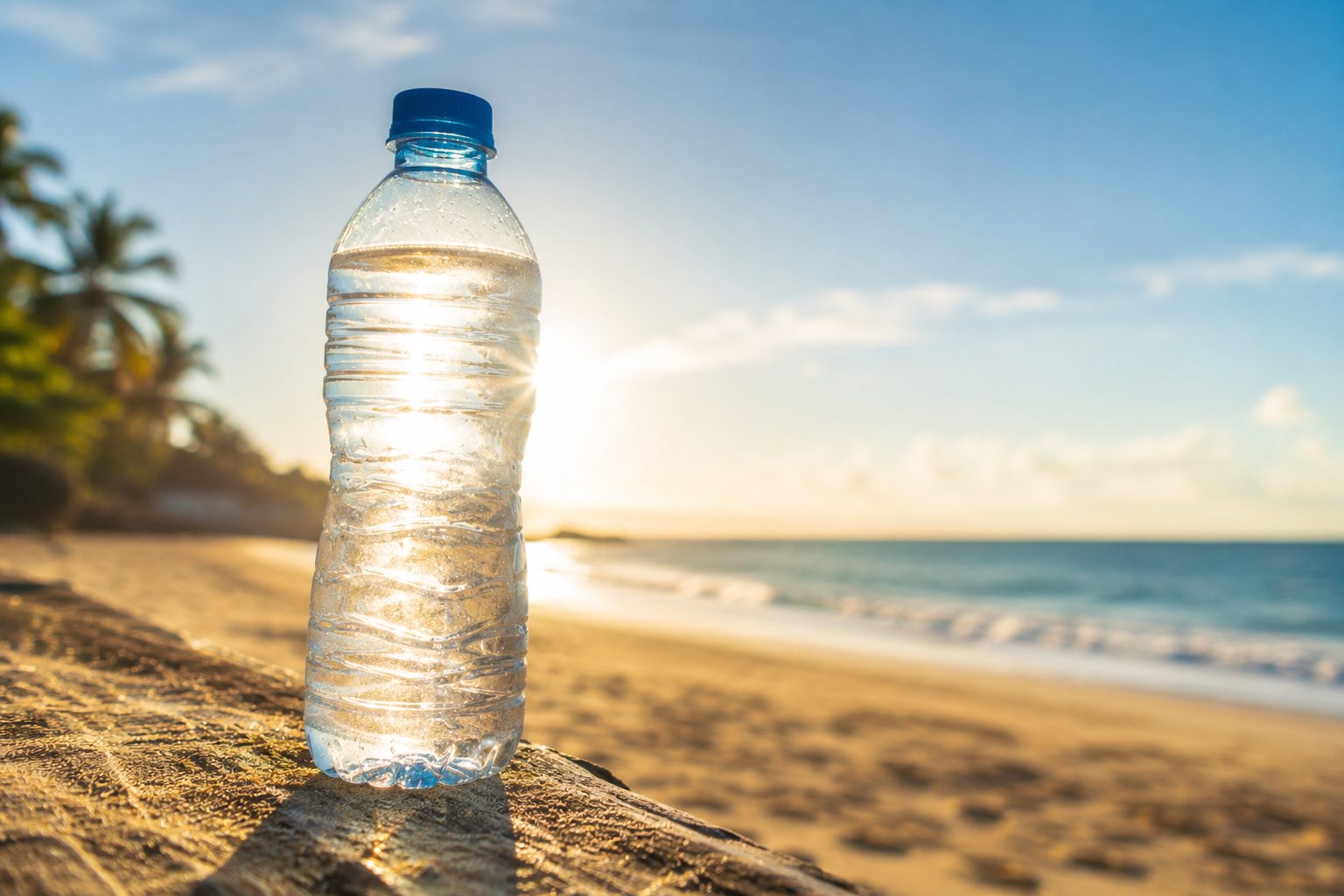
Say NO to hot plastic
Is Your Water Bottle Actually Giving You More Than Water?
We all know drinking more water is good for us…but what if the bottle it’s in is part of the problem?
If your plastic water bottle has survived three beach trips, a gym bag,
and two weeks rolling around in the back seat of your car…it has officially earned retirement.
Plastic water bottles can release tiny amounts of chemicals and microscopic plastic particles into the water they hold. Heat makes this even worse.
Think about it. That bottle of water you just grabbed from the store…how long has it been sitting in plastic? Was it stored in an air-conditioned warehouse the whole time, or did it spend days or weeks in a hot truck or warehouse? The truth is, you have no way of knowing. It may contain more than just H₂O.
Researchers have found that repeated exposure to certain chemicals used in plastics, along with microplastics, may contribute to inflammation and could potentially affect hormone function, fertility, metabolism, and long-term health.
Microplastics Are Everywhere
Scientists have discovered microplastics almost everywhere, from our oceans and soil to the food we eat and even inside the human body. Researchers are still studying exactly how these tiny particles affect us over time. While many questions remain, health experts agree that reducing unnecessary exposure is a smart precaution.
Heat Makes It Worse
One of the biggest concerns is heat. A bottle left in a hot car, sitting on the beach, or baking by the pool is more likely to release chemicals than one kept cool.
Reusing disposable plastic bottles over and over may also cause the plastic to break down, increasing the chance that tiny particles can end up in your water.
A Simple Swap That Makes Sense
The good news? This is one of the easiest healthy changes you can make.
Instead of buying cases of disposable water bottles, consider carrying a reusable stainless steel or glass bottle. If you do buy bottled water, keep it out of direct sunlight and avoid storing it in hot vehicles whenever possible.
No one can eliminate every environmental exposure, but reducing the ones you can control is a great place to start. Small changes, repeated every day, often have the biggest impact on long-term health.
My challenge for you this month: If you’re still buying cases of bottled water or reusing disposable bottles, switch to a reusable bottle for one week. Your body—and your wallet—just might thank you.


